Sonshi - The original Sun Tzu's Art of War resource
  • Home
  • Sun Tzu
    • Start the path to victory
    • Who was Sun Tzu?
    • What is Sonshi?
    • Sun Tzu's Art of War Translation
    • Best Art of War Books
    • Official Sonshi Art of War book
    • Interviews with Art of War authors and scholars
    • Sun Tzu lives on slideshow
    • Sun Tzu's Way slideshow
    • Articles related to Art of War and strategy
  • Blog
  • Store
  • About
  • Contact
Online since 1999

Would the greatest strategist of all time please stand up?

8/6/2017

2 Comments

 
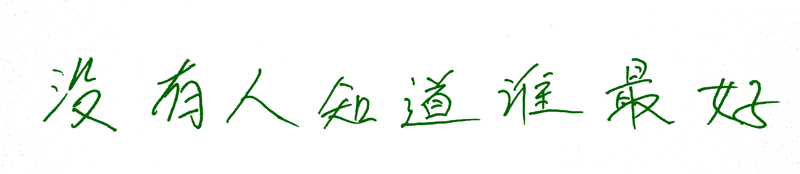
Nobody knows who is best
​"Winning battles such that the whole world cries, 'Excellent!' is not the highest excellence." Sun Tzu
At the footer of every Sonshi.com page contains the above quote by Sun Tzu. It is by far my favorite from The Art of War.

The reason why I like the quote so much is because it reminds me of the harsh reality of everyday life. Universal praise is seen as good but is it really? Would the sun need to validate itself that it is bright? Does the moon need feedback from others to know it is round? What is true would be so apparent and obvious, it would almost be embarrassing to point it out. Like body odor, nobody needs to say anything to prove it is there.

Thus praise is often a sign of flattery, usually to gain favor. But in Sun Tzu's case, it is worse than harmless brown nosing. It can actually be dangerous. If a military general wants praise, he or she would wait for conflicts to ensue so the general can "save the day." After many lives lost and treasure spent, the best case scenario would be a war won. Yet what exactly was won?

In contrast, if a general doesn't care for praise but only results, he or she would try to prevent battles from starting in the first place. In such a scenario, there would indeed be no praise from others, nothing that people can point to that would confirm how skilled that general really was. You can't compliment something that never happened.
"The general who does not advance to seek glory, or does not withdraw to avoid punishment, but cares for only the people's security and promotes the people's interests, is the nation's treasure." Sun Tzu
If you are such a leader, the only type of approval you would receive is self-approval. You would gain self-respect, which is the highest level of respect you could possibly earn.

Why stop at the leadership level? Expand such a trait to everyone else, and you can see the power such an idea can make, and the seemingly limitless progress a community, company, and country can make:
“The best rulers are scarcely known by their subjects;
The next best are loved and praised;
The next are feared;
The next despised:
They have no faith in their people,
And their people become unfaithful to them.
Therefore, the ruler is best when people barely know he exists, when his work is done, his aim fulfilled, they will say: we did it ourselves.”
Lao Tzu
Therefore, it would be quite impossible to rank the truly best military general from historical records. What we could easily discover are the ones who had to fight grand wars and thus gained glory after many lives lost.

What we won't easily discover are the countless generals who didn't have to fight wars because those wars were proactively averted. There was no war, but there was no glory. There were no lives lost, but there was no praise. Yet is there any other worldly matter more glorious and praiseworthy than preventing a war, i.e., "winning without fighting"?

So similarly to how we venerate the Unknown Soldier who died for our safety, we too can recognize the Unknown Leader who made sure that his or her soldiers came home safely to their spouses and children. That is truly the highest excellence of all.

2 Comments

Happy 18th birthday, Sonshi.com!

8/5/2017

6 Comments

 
Original sonshi samuraiThe Sonshi Samurai on front page, circa 1999
Dear readers of Sonshi.com,

When Sun Tzu wrote his Art of War book in 512 BCE, he had no idea it would survive 2529 years later, much less be read, studied, and applied by countless leaders from countries all across the globe.

Whether pacifying an upset teenager, managing a billion-dollar corporation, or preventing terrorist attacks, it would seem every practical situation could benefit from Sun Tzu's strategic lessons.

Since 1999, Sonshi.com has been at the forefront of the application of Sun Tzu's principles by individuals, organizations, and nations. The path we took during the last 18 years has been challenging to say the least, but not without significant successes.

Next week, on August 12, is the date the domain name Sonshi.com was registered. It is the date of "the start."

When I registered Sonshi.com, it was simply to share my excitement about Sun Tzu's Art of War with others on this new platform called the World Wide Web. The Sonshi name came from General Samuel Griffith's translation where he discusses the legendary Minamoto Yoshitsune, one of Japan's most famous strategists. When Yoshitsune was young, the monks in charge of his education could barely make him sit still -- except when Sonshi was read to him. Then he was all attention. I was that young Yoshitsune.

Legend would also have it that after being betrayed by his allies, Minamoto Yoshitsune sailed to mainland Asia and emerged as none other than Genghis Khan.

Likewise, Sun Tzu's philosophy sailed to distant shores while still remaining useful and relevant over the centuries, bridging both time and space. Sun Tzu has not only defeated the Grim Reaper but has made a friend of Father Time.

​So what ageless secrets would Sun Tzu share in the next 2,529 years? There is no need to wait. They aren't secrets at all, but open wisdom that can be learned and implemented today by those who are in need. Sun Tzu would serve as a good friend indeed and in deed.

Quintus Ennius wrote [3rd century BCE]: 'Amicus certus in re incerta cernitur.' This translates from the Latin as 'a sure friend is known when in difficulty.'

In the 16th century the proverb was recorded as follows in John Heywood's A Dialogue Conteynyng Prouerbes and Epigrammes, 1562:

'Prove [that is, test] thy friend ere [before] thou have need; but, in-deed
A friend is never known till a man have need.
Before I had need, my most present foes
Seemed my most friends; but thus the world goes.'


Source: Phrases.org.uk
Sincerely,
Thomas Huynh, founder
​Sonshi.com
6 Comments

Strategy is your advantage

7/15/2017

6 Comments

 
Picture
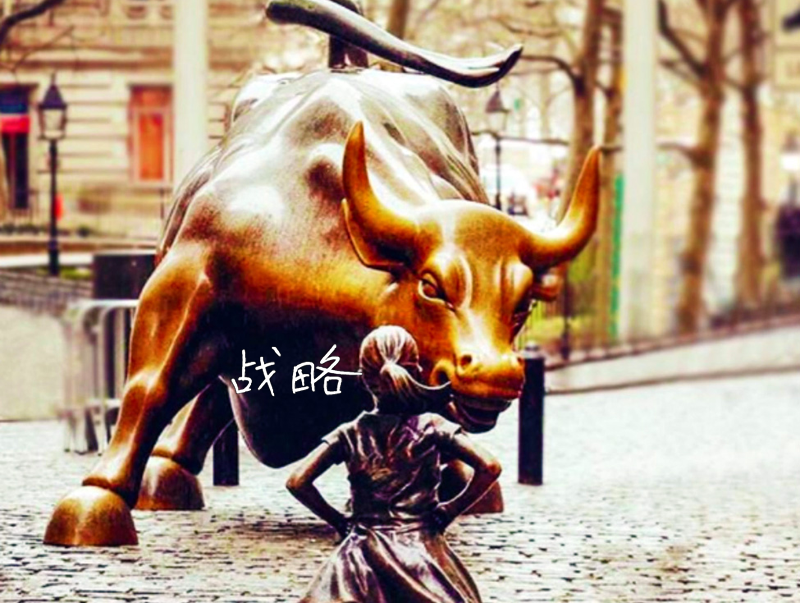
Whenever we show people the photo above, inevitably we get responses like, "That's crazy! She's going to die!" However, what they see is only what is obvious. What they see is an enormous bull about to attack a harmless girl.

But are we all certain that is the case?
"Perceiving a victory when it is perceived by all is not the highest excellence ... For lifting an autumn down is not considered great strength, seeing the sun and the moon is not considered a sign of sharp vision, hearing thunder is not considered a sign of sensitive hearing." Sun Tzu (Chapter Four)
A good litmus test question is: would you bet your house on who would win in this battle between the bull and the girl?

Because what is not obvious is actually more relevant. What is not obvious is the girl's strategy. What is not obvious is the bull's state of mind. What we don't see is what or who is behind the girl. (This is similar to our Art of War book cover with the sole piece on the chessboard surrounded by numerous opposing pieces.)

Consider another principle in The Art of War: 
"In warfare, numbers may not necessarily be an advantage; do not advance aggressively." Sun Tzu (Chapter Nine)
The Art of War usually advises the reader. But in this case, the above quote applies to the bull, not the girl. With strategy, the girl is confidently standing firm as if tempting the bull to make an aggressive move. If angry, aimless, and easily moved, the bull takes the bait, would it be a good result for him? We wouldn't bet on it.

​The bull might have the "numbers," as in strength, but what good is strength if he is controlled by others?

So hopefully your viewpoint of the above photo now becomes clearer. And the lesson we can learn from it becomes clearer as well -- that no matter how seemingly formidable the problems we face, it is with this little girl's level of care and strategic thinking that we all need to employ if we want to win each and every day of our lives.
6 Comments

Leadership is caretaking

6/25/2017

0 Comments

 
Picture
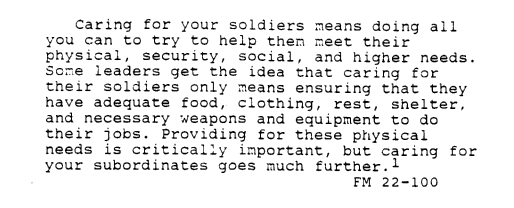
"Look upon your soldiers like beloved children, and they willingly die with you." Sun Tzu's Art of War
Liu Ji, a military strategist and top adviser to the Emperor Zhu Yuanzhang who founded the Ming Dynasty, used the the same Sun Tzu quote above to tell of a story of Wu Qi. Wu Qi was a Wei general during the Warring States period. He was widely feared by his enemies because of his fearless army.

Wu Qi wore the same clothes and ate the same food as his lowest-ranked soldier. He did not use a mat when sitting and did not ride in a carriage when traveling. Like his soldiers, he walked when traveling, carrying his own supplies and belongings. Essentially, he experienced the same toil and hardships as his army.

Once, when Wu Qi noticed a festering wound on one of his soldiers, he sucked the pus out of it. When the soldier's mother heard this, she mourned. Wu Qi personally cared for her husband in a similar manner, and as a result, he died in battle advancing without taking a single step backwards. She now wonders where her son will perish as well.

Liu Ji noted, "It was because Wu Qi was strict with himself while impartial toward others, and had won the hearts of his soldiers that a Lord of Wei had made him military governor of West River."

There is no such thing as good leadership, sound leadership, or effective leadership. There is only leadership. It's either you have it or you don't. And so leadership demands taking care of those who take care of you.

​Alexander the Great not only cavorted with his soldiers, he also fought and led them from the front in battle. Creating one of the largest empires of the ancient world, Alexander did not lose one single battle in his lifetime.

Sometimes military leaders can treat their soldiers well even when they aren't human. During an intense build up to an important battle during the US Civil War, General Ulysses Grant spotted a teamster beating a horse in the face with the butt-end of a whip, trying to free up a wagon stuck in mud. The usual calm Grant was so outraged that he ordered the teamster be tied to a tree for hours, presumably to allow him to think about his cruel actions.

In an activity such as warfare, where the outcome is so critical, it would seem inevitable that humanity takes a backseat to success. Sun Tzu disagrees. He believes that treating people on all sides with humaneness and victory in conflict are one and the same. Ensuring the success of a strategy means ensuring the success of others. Thinking about strategy means thinking about everyone. Taking care of strategy means taking care of even the lowest among us.
0 Comments

What a dad truly wants for Father's Day

6/18/2017

2 Comments

 
Holding dad's hand
I don't speak for every father with this blog post, but I know what being a dad is like. Thus, I believe I can speak for more than a few dads on what we would like for Father's Day.

First of all, let's define a father.

A father, biologically, provides his child 23 chromosomes. The mother provides her child 23 chromosomes as well, thus making 23 pairs of chromosomes. But what makes a father unique is on the 23rd chromosome set, he can give his child either the Y or the X chromosome, which determines the child's gender as being male or female, respectively. The mother on the 23rd can only give her child the X chromosome.

During this entire process, there's a lot of chromosome re-shuffling and re-combination that takes place. However, that Y chromosome is handed down unchanged from father to son, whereas the mitochondrial DNA is handed down unchanged from mother to child, regardless of gender.

If a son grows up into a man and has a baby, he is also a father. But he isn't always a dad. There is a difference. So let's define a dad.

A dad isn't perfect. Unlike a father who always hands down that Y chromosome to his son unchanged, a dad isn't always that consistent. He will make mistakes. He will lose his cool. He will make petty, unreasonable demands. But what a dad will always do is that he will always think about his children.

Even when he makes a mistake, it was trying to do what's best for his daughter or son. Even when he loses his cool, it was because he was frustrated that things didn't go right for the child. Even when he makes petty, unreasonable demands, it was to protect his boy or girl from harm.

Yes, a dad can spend a lot of time away at work. He needs to bring home the bacon. And if he's a stay-at-home dad, he can still spend a lot of time making dishes like Tartiflette from the bacon brought home. Essentially, if there's bacon, dads will spend a lot of time.

But when the bacon dealing's done, dads have a listening ear, if not a keen sense of analyzing the environment to make it better. He knows when a child is down, and so will offer to play catch outside. He knows to hold his tongue when his teenage offspring is telling him he doesn't know much about life. He even knows when to let his children fool him from time to time, allowing them to learn life's lessons themselves.

All dads want to be the greatest dad in the world. We are not humble in that one aspect. Trouble is, sometimes intentions don't always translate to actions or results. Sometimes we come close to our dream, often we fall short. That doesn't stop us dads, however, from trying. To make a day successful for a dad, it would take the strategic mind of Sun Tzu to pull it off. So The Art of War should be on every dad's library if he wants to accomplish his mission of getting his children to shout out, "You're the best, dad!!"

Therefore, the best gift a dad can receive for Dad's Day is his children's happiness. That would mean, of course, our one day of the year would turn into Children's Day. And for us dads, Children's Day is every day.
2 Comments

Make ☮.com, not war

5/31/2017

7 Comments

 
☮.com
☮.com
"To achieve a hundred victories in a hundred battles is not the highest excellence; to subjugate the enemy's army without doing battle is the highest of excellence." Sun Tzu's Art of War
We at Sonshi.com are proud to announce today that we are now the stewards of ☮.com! To say we are honored is an understatement.

☮.com is one of the first three emoji domain names ever registered on the internet. For those not familiar with emoji, they are "ideograms and smileys used in electronic messages and Web pages. Emoji are used much like emoticons and exist in various genres, including facial expressions, common objects, places and types of weather, and animals."

Sonshi's emoji is ☮.

As students of Sun Tzu, we understand the objective of understanding warfare is peace. Even when we are forced to do battle, we want to end it quickly. If possible, it is best to prevent fighting altogether. There are few symbols that represent peace and are as recognizable as ☮.

If a picture is worth a thousand words, ☮ will speak in one image what Sonshi's mission is all about. Therefore, ☮.com will be an integral part of Sonshi.com from now on. Stay tuned for some exciting future developments!

Peace around the world seems impossible, but it is indeed possible if it starts in each and every corner of the world. Continue with us on the journey to make the world a more peaceful place, one corner at a time. Thank you for all your support and encouragement over the years.
7 Comments

Why halfway is insufficient if not dangerous

5/27/2017

1 Comment

 
Sonshi.com: Don't stop halfway
[04.02] Those skilled in warfare can make themselves invincible, but cannot necessarily cause the enemy to be vulnerable. Therefore it is said one may know how to win but cannot necessarily do it.
It is often misunderstood that Sun Tzu said victory would be assured if you know yourself and you know your enemy. A more accurate understanding of his advice is knowing yourself and knowing your enemy might ensure your safety but it doesn't guarantee defeat of the other side. The other side might be led by someone wise. It would thus only provide you opportunities in the future for victory.

​Guarantees in life are rare, especially when interests clash. And so it is not surprising to learn that guaranteeing victory in a combative situation isn't easy; it cannot be accomplished by securing only two variables: you and your opponent. According to Sun Tzu, it would also require a clear advantage in the environment you and your competition operate under. For example, the environment can represent the current legal, political, and social shifts that are in your favor. Otherwise, Sun Tzu advises, achieving success based on only knowing yourself and the competition would still depend on a little bit of luck, perhaps with odds not much better than a toss of coin:
​[10.21] If I know the troops can attack, but do not know the enemy cannot attack, my victory is half. 
[10.22] If I know the enemy can be attacked, but do not know the troops cannot attack, my victory is half. 
[10.23] If I know the enemy can be attacked, and know the troops can attack, but do not know the ground in battle, my victory is half. 
[10.24] Therefore, one who knows how to advance the army is limitless when taking action.
​[10.25] Therefore I say, if you know the enemy and know yourself, the victory is not at risk. If you know the Heaven and you know the Ground, the victory is complete.
Therefore, by not knowing the landscape and securing a strong position there, the odds are not in your favor. And for a matter as grave and serious as warfare, it would be downright evil to act without making sure that you are capable, the enemy incapable, and the environment are conducive to your cause, strategy, and effort.

If there are relevant variables that affect a critical outcome for you, it would be a waste if you neglect to first gain advantages in them all before committing valuable and limited resources. Although you cannot control everything since not everything is controllable, you must be superior in those factors that are manageable or under your control.

By not trying to be fully prepared and ready, there are times when being halfway can leave you vulnerable:
[09.02] After crossing a river, you must stay far away from it. If the enemy crosses a river, do not meet him in the water. When half of his forces has crossed, it will then be advantageous to strike.
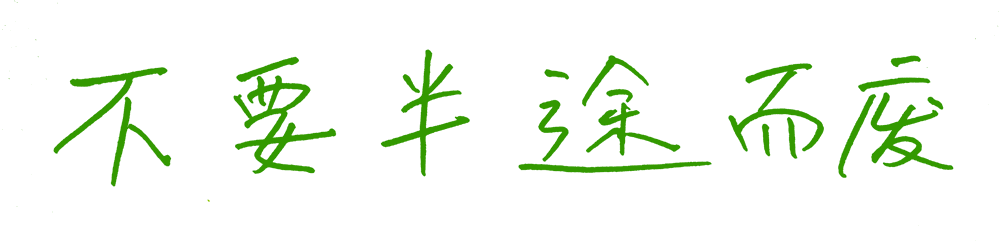
There are times, then, you must be patient and not move before you are proficient. Because if you take action before you are able to produce a positive result, you will end up further behind than you were before. This is worse than staying still. Work hard to prepare and tie any loose ends, and go the extra mile necessary to outcompete your competition.
​[04.06] Perceiving a victory when it is perceived by all is not the highest excellence.
Due to the extraordinary care you put into your efforts, overcoming problems along the way and achieving your goal would be that much sweeter and satisfying. You gain more than a goal. You gain tremendous pride and self-respect. Therefore, don't stop halfway if you want to go farther. Don't pause when you can continue on your path to complete victory, the highest excellence of all.
1 Comment

Sun Tzu on making mistakes

5/21/2017

3 Comments

 
Sonshi.com:
Sonshi.com: "Mistakes are a part of life but we can learn from them"
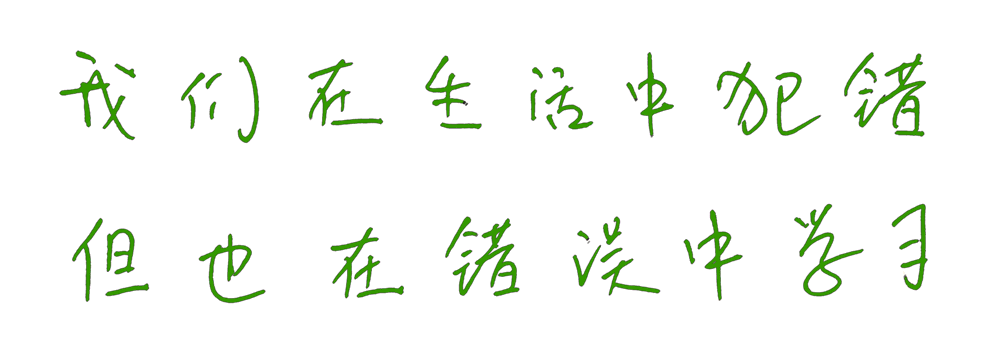
Making mistakes in life is common, a mark of growing up and a passage to maturity. Most mistakes aren't fatal and are lessons in tolerance, creativity, and gratitude. When a boy named James accidentally breaks a leg of his favorite giraffe toy, it is no longer new, but it is still a toy nonetheless. A three-legged giraffe can stand tall just the same as a four-legged one.

Furthermore, when matters are sufficiently in place, despite them not being perfect, we must take action and not be afraid of making mistakes. “The only man who makes no mistakes," Teddy Roosevelt once said, "Is the man who never does anything."

However, there is this other extreme perspective, a philosophy centered on a motivational, shoot now and aim later, "not giving a f---" bent. Not only are mistakes expected, but they are also encouraged, and if necessary, even manufactured. Rich and famous people are often quoted to promote such behavior without context or background.
"If one gains victory in battle and is successful in attacks, but does not exploit those achievements, it is disastrous. This is called waste and delay." ​Sun Tzu's Art of War [12.07]
Sun Tzu indeed advocates speed and gaining a first-mover advantage. But that isn't the same as acting before planning. The people and companies that promote actively making mistakes can usually afford to make mistakes because they have surplus and vast resources. People and companies that are starting out with limited resources following such philosophy will not likely survive. Sound strategies depend on caution.
"No miscalculations mean the victories are certain, achieving victory over those who have already lost." Sun Tzu's Art of War [04.10]
Especially relevant to those from a disadvantaged or precarious situation, Sun Tzu's advice to only fight the battles we can win will ensure we will survive another day and deliberately grow stronger in the process. Without such prudence and given our position or situation, one mistake could be our last. But even if we are strong and in a favorable position, his advice remains beneficial because it prevents us from taking things for granted and allowing a competitor to later gain an upper hand.
"Those skilled in warfare establish positions that make them invincible and do not miss opportunities to attack the enemy." Sun Tzu's Art of War [04.11]
To Sun Tzu, safety comes first, even when he's talking about opportunities. Opportunities come and go, but being careless and impatient could prove fatal. No amount of reward is worth that price.
"​Therefore, a victorious army first obtains conditions for victory, then seeks to do battle. A defeated army first seeks to do battle, then obtains conditions for victory." Sun Tzu's Art of War [04.12]
When emotions are high, we can't help but want to get started. While it's possible that we can somehow manage the situation as it happens, it is less likely that we will prevail when our opponent is better prepared for that situation than we are. And since we cannot assume the competition will not be prepared, it is always an unwise decision to enter into an endeavor without planning and practice.
"One who knows when he can fight, and when he cannot fight, will be victorious." Sun Tzu's Art of War [03.18] 
If a goal is worthwhile, it would be crazy to not put every ounce of effort and resource into making it a success from start to finish. We read the tedious contracts and manuals from cover to cover. We try to anticipate the possible questions and concerns of others. We go the extra mile to make even a small improvement and impression. With such a hefty investment, we would naturally know whether or not we are ready and able to challenge the competition. It is only when we don't put in the effort would we have the audacity to be reckless because we haven't much to lose. Just as well, because there wouldn't be much to gain.
"A smaller army that is inflexible will be captured by a larger one." ​​Sun Tzu's Art of War [03.12] 
Being cautious and conservative doesn't necessarily mean being rigid. To ensure safety, it is always wise to flex with changes in the environment so we don't fall behind the curve and leave ourselves exposed to unnecessary risks. Analogous to Sun Tzu's quote above, only a large tree is strong enough to oppose the wind, but grass and plants need to flex with the wind lest they break.
"To march over a thousand kilometers without becoming distressed, march over where the enemy is not present." Sun Tzu's Art of War ​[06.05]
"Contemplating the advantages, he fulfills his calculations; contemplating the disadvantages, he removes his difficulties." Sun Tzu's Art of War ​[08.08]
"On difficult ground, I press on quickly." Sun Tzu's Art of War [11.52] ​
The leader should be allergic to mistakes as he or she is to entering into difficult situations. There is no glory in prevailing in a tough situation when it could have been prevented in the first place. It is not easy to identify and avoid trouble. We must pay close attention and extrapolate the significant effects from the seemingly insignificant causes. In other words, we strive to alleviate frowns so that wars could not take root. All the while, we conserve energy, build strength, and most importantly, we don't create unnecessary grief and suffering for ourselves and those around us.
"An army does not have constant force or have constant formation. Those who are able to adapt and change in accord with the enemy and achieve victory are called divine." Sun Tzu's Art of War [06.35] 
"Do not thwart an enemy retreating home. If you surround the enemy, leave an outlet; do not press an enemy that is cornered." Sun Tzu's Art of War [07.26] 
​Alexander Pope wrote in An Essay on Criticism, “To err is human, to forgive, divine.” Sun Tzu's benevolence is doubly sharp. On one side is a wisdom so impervious that failure is practically impossible; there is no discussion on how to cope with failure in the entire Art of War book because it is a given one does not fail if the principles are truly followed. On the other side is a wisdom so spiritual that failure for the competition is also impossible; the winner is divinely chosen to take care of All-Under-Heaven, even for those who oppose you. There are no enemies, since no one can compare to your strength in force, fortitude, or philosophy.
3 Comments
Forward>>

    Author

    Thomas Cuong Huynh, founder of Sonshi

    Picture

    Archives

    September 2023
    March 2023
    September 2022
    August 2022
    July 2022
    June 2020
    April 2020
    September 2019
    July 2019
    May 2019
    April 2018
    March 2018
    February 2018
    January 2018
    December 2017
    November 2017
    October 2017
    August 2017
    July 2017
    June 2017
    May 2017


    Categories

    All

    RSS Feed

SONSHI - THE ORIGINAL SUN TZU'S ART OF WAR RESOURCE
​"Winning battles such that the whole world cries, 'Excellent!' is not the highest excellence." Sun Tzu
Privacy Policy
© 1999-2024 Sonshi.com. All rights reserved. The name SONSHI® and "four-leaf clover" logo are registered, incontestable trademarks of the Sonshi Group 和平的力量.